Workflows as Apps
OVERVIEW
Traditionally, workflows were designed as backend infrastructure—used primarily for data movement, system integration, and complex automation behind the scenes. Their primary role was to orchestrate.
As workflows move closer to everyday business operations, their role is expanding. Today, workflows are increasingly used by non-technical knowledge workers who rely on automation to complete routine, outcome-driven tasks as part of their daily work.
MY ROLE
Lead the project & designed multiple app interfaces for different output operators on workflow tool.
TIMELINE
Jan 2025- Jun 2025
DOMAIN
AI & ML
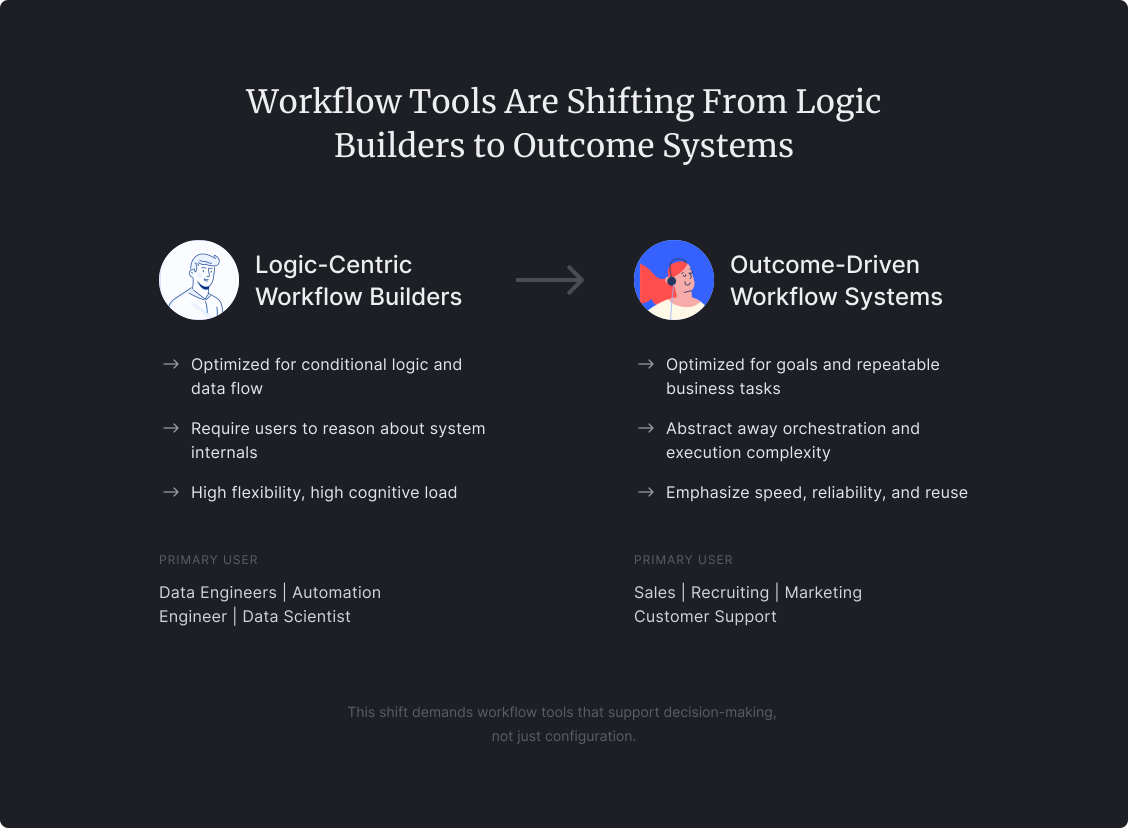
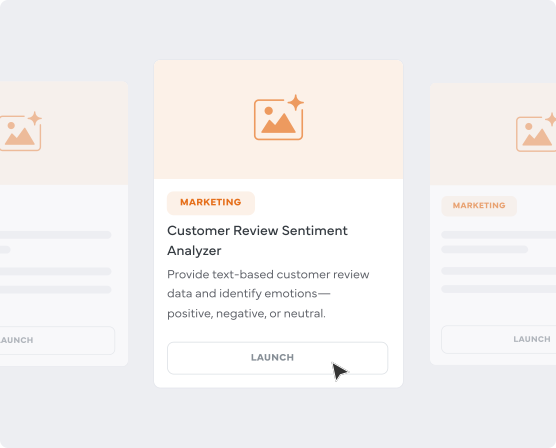
Introducing Workflow Apps

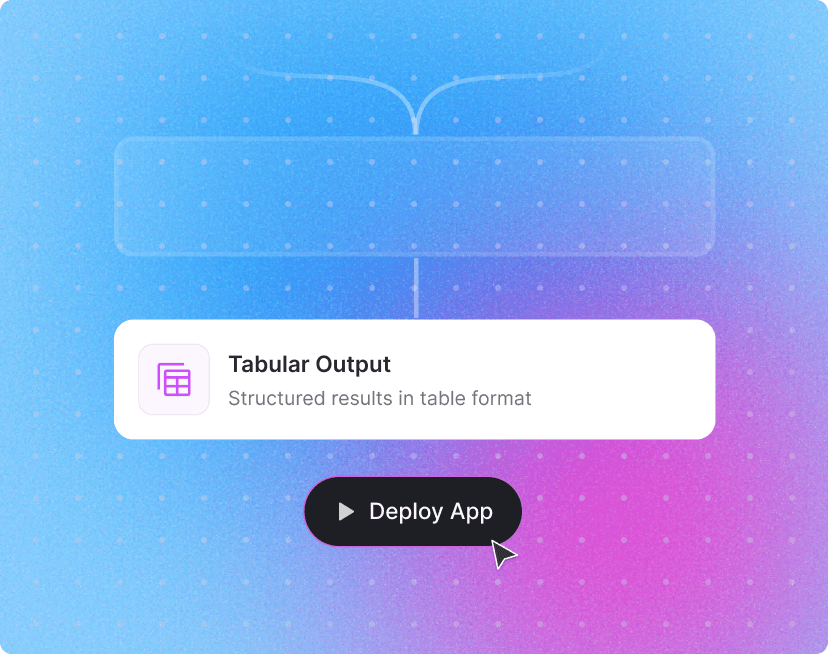
How Apps Are Generated

Tabluar output Operator
Tables with sorting, filtering, and pagination

Long-Form Text Operator
Structured text with sections

Search App Operator
Retrieve and rank information across sources.

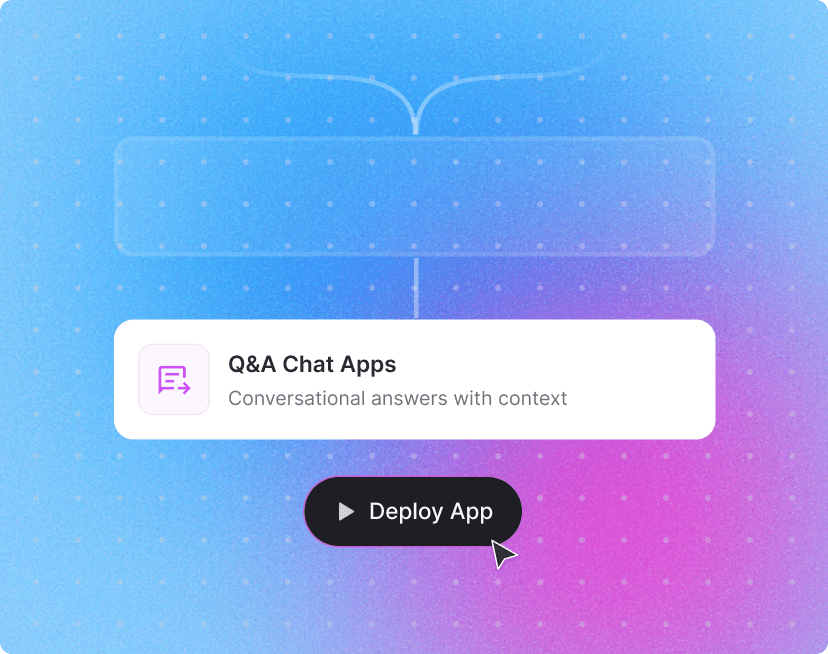
Q&A Chat app Operator
Enable iterative questioning and exploration.
Design Principles & Guardrails
1. Outcome Over Configuration
Apps expose only what is necessary to achieve an outcome. Workflow logic, conditions, and orchestration remain hidden by default.
2. Safe Interaction by Default
Knowledge workers can Trigger workflows, Provide inputs, Consume results. They cannot Modify logic, Break dependencies, Affect system integrity.
Clear Ownership Boundaries
Builders own logic, structure, and evolution of workflows. Knowledge workers own execution and outcomes. This separation prevents accidental misuse while enabling scale.
Reuse Over Reinvention
Apps are designed to be Reusable, Shareable, Reliable over time. Encouraging workflows to function as internal tools, not one-off automations.
Tabular Output Apps
Structured data, made usable
Tabular Output Apps surface workflow results as clean, scannable tables—optimized for review, filtering, and export. By presenting structured data in a familiar format, they allow knowledge workers to quickly interpret results and act on them without understanding how the data was generated.
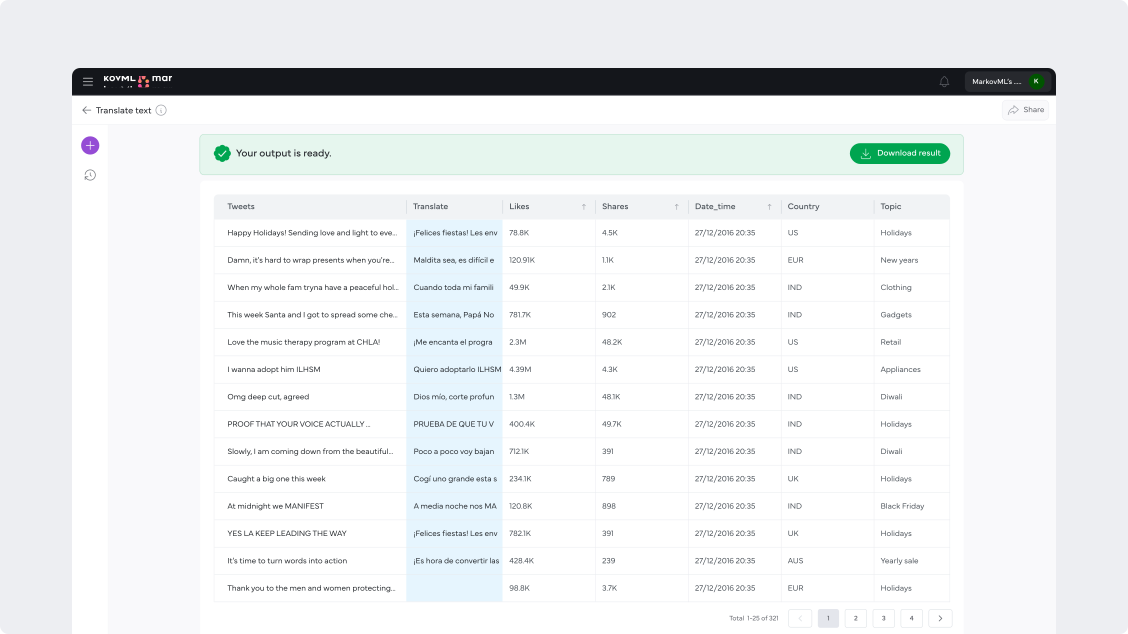
Interface generated via Tabular Output Operator
Long-Form Text Apps
Complex reasoning, delivered as readable output
Long-Form Text Apps transform multi-step workflows into coherent written outputs. They present structured narratives that users can read, review, and reuse—removing the need for prompt engineering or manual synthesis while preserving clarity and intent.
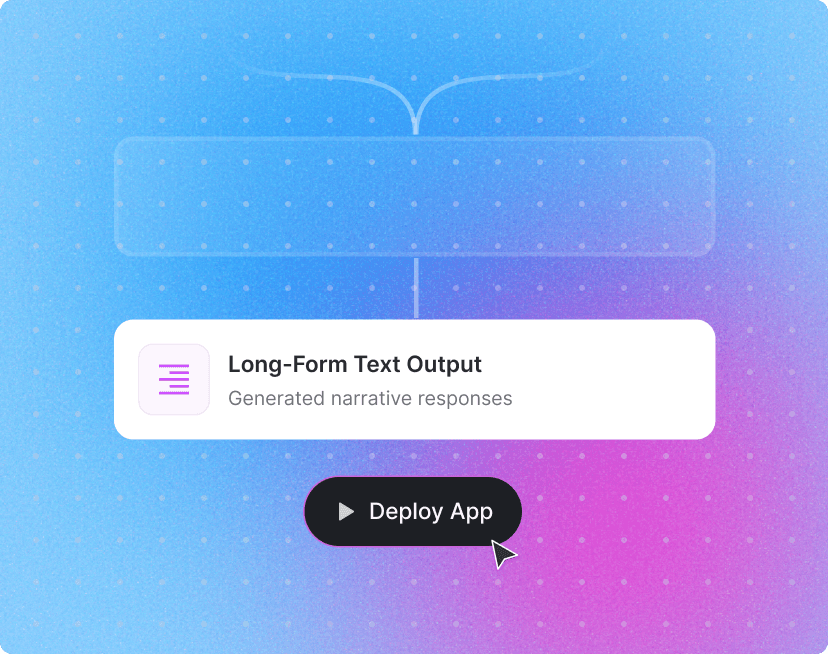
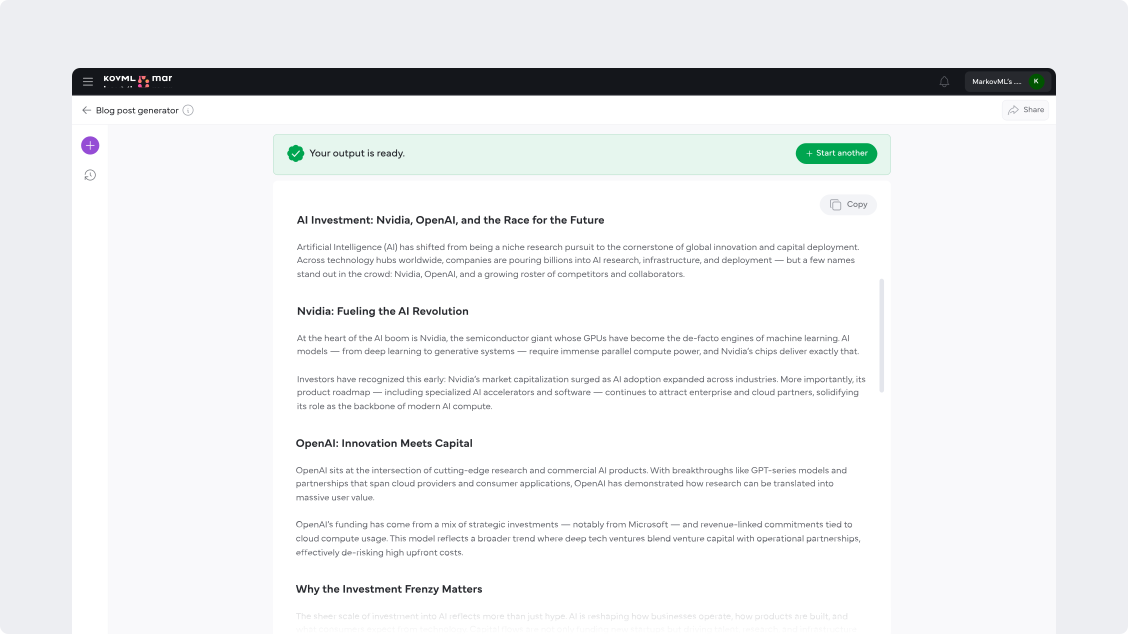
Interface generated via Long-Form text Output Operator
Search Apps
Ask once, explore across systems
Search Apps convert workflows into fast, query-driven experiences. Users enter a single input and receive ranked, relevant results aggregated from connected sources—making discovery intuitive while keeping retrieval logic hidden.
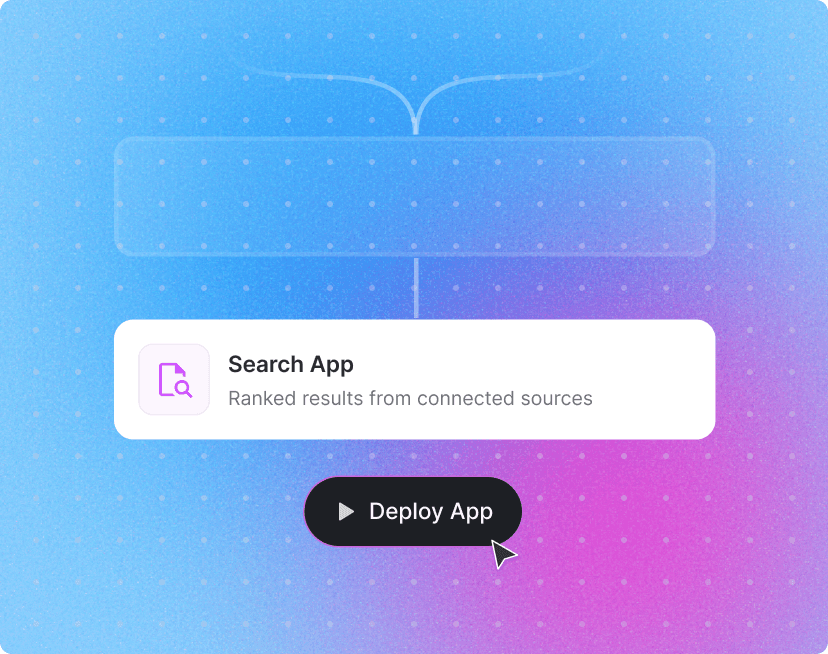
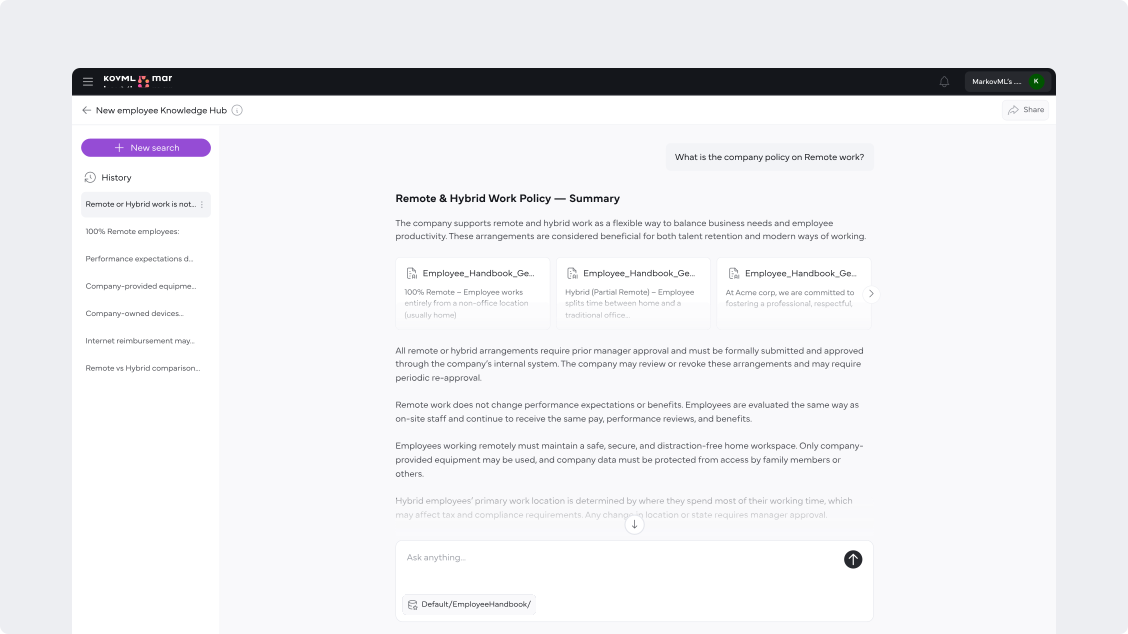
Interface generated via Search App Output Operator
Q&A Chat Apps
Explore answers through conversation
Q&A Chat Apps enable iterative interaction with workflows through a conversational interface. They maintain context across turns, allowing users to ask follow-up questions and refine understanding without navigating configuration or logic.
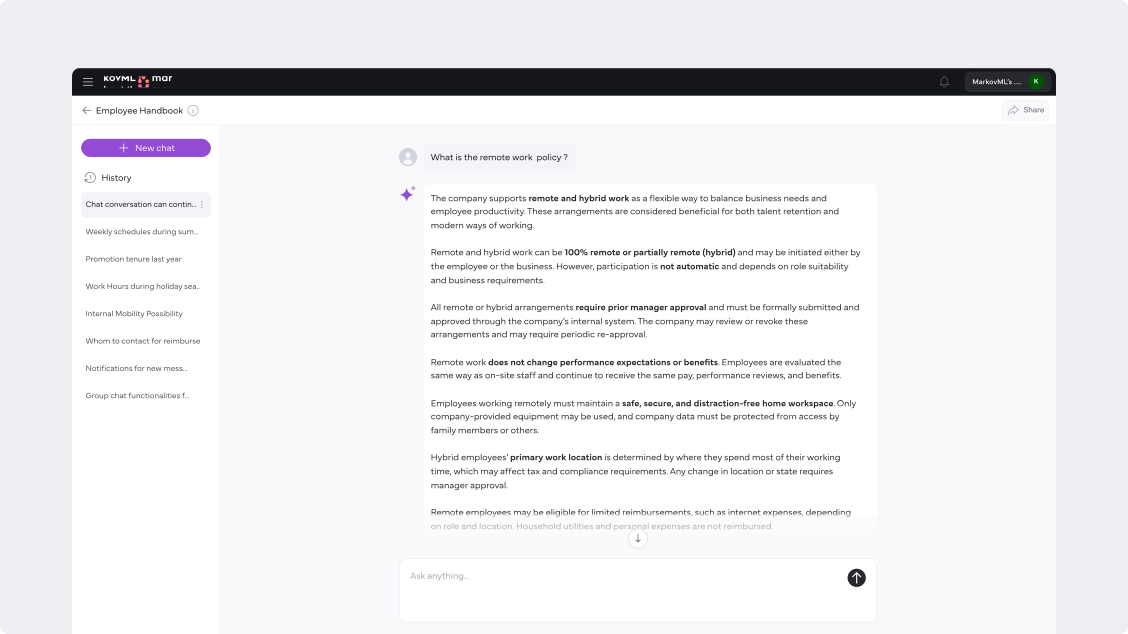
Interface generated via Q&A Chat App Output Operator
IMPACTS
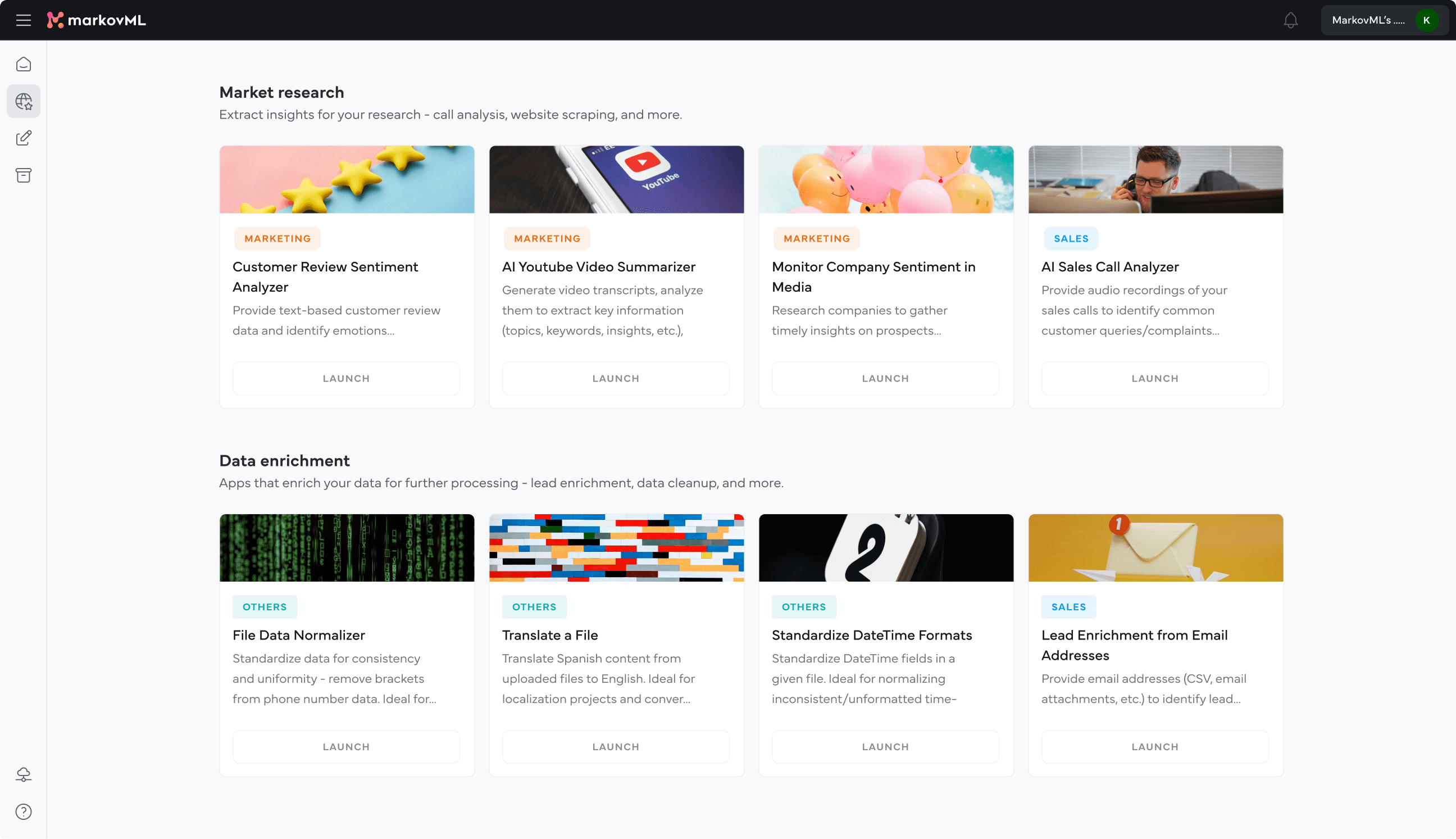
Apps generated through the workflow builder enabled the MarkovML team to create targeted, vertical solutions for Marketing and Sales, empowering knowledge workers to achieve outcomes without engaging with underlying complexity.
LEARNINGS
Vertical solution is the future. Nature of AI is such that, it's way more powerful and effective when applied to specific context.
READ THE NEXT CASE STUDY